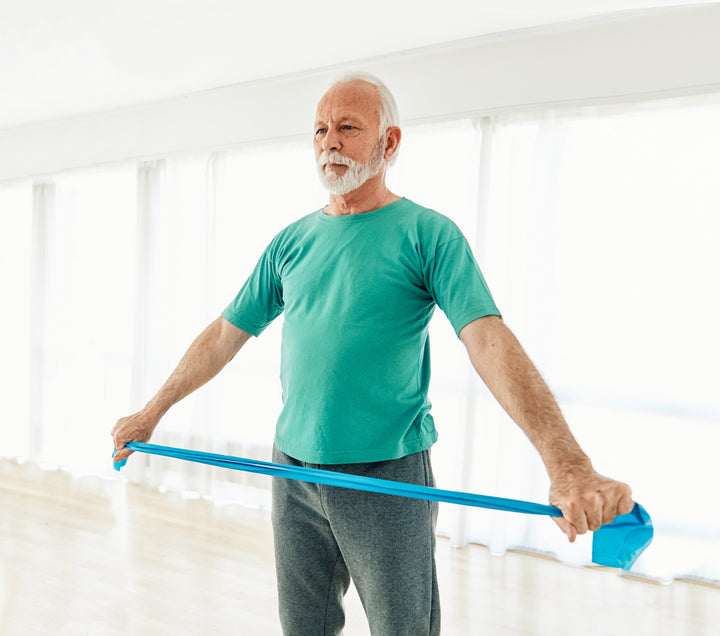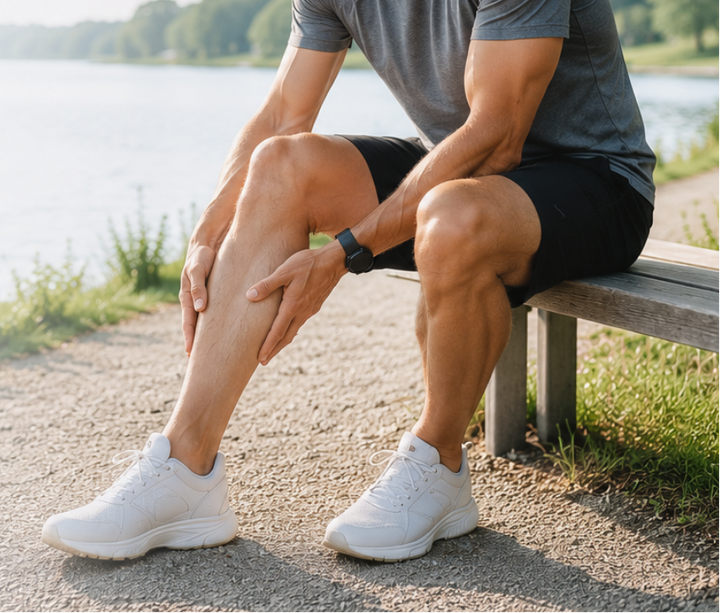
 Starting to exercise again after a long break is a common New Year's resolution – but also something many people do before summer, after an injury, or when motivation returns. At the same time, it's not uncommon for the knee or back to start aching after just the first few workouts.
This doesn't necessarily mean you've suffered a serious injury. Often, the discomfort is simply due to the body needing time to adapt to the increased load. By understanding why the pain occurs, you can more easily adjust your training and reduce the risk of long-term problems.
Why do your knee or back hurt when you start exercising?
When the body is subjected to a load it's not used to, muscles, tendons, joints, and ligaments react. If the increase happens too quickly, the tissues can become overloaded before they've had a chance to adapt.
Common causes include:
- You've increased your training volume or intensity too quickly.
- The muscles around your knee or core are weaker than before.
- You've changed the surface you're training on or switched running shoes.
- Your technique in exercises or running stride needs improvement.
- Your body isn't recovering sufficiently between workouts.
Knees and lower back are stressed in almost all physical activity, and are therefore two of the areas where problems often appear first.
Soreness or something else?
Typical muscle soreness is usually felt in the muscles and appears a day after exercise. It usually subsides within a few days.
Pain from the knee joint or back often feels different. It can arise during the activity itself, linger afterwards, or recur every time you exercise. If the pain increases, becomes sharp, or affects your daily life, you should take it seriously and adjust your training.
In our injury guides for knees and back, you can read more about common injuries and ailments in the knee and back, respectively.
Common mistakes when starting to exercise
Many people are motivated when they start exercising again and want to quickly return to their previous level. Unfortunately, this is also when the risk of overuse is highest.
Some common mistakes include:
- exercising too many days in a row
- increasing both intensity and training volume simultaneously
- skipping warm-ups
- ignoring recurring pain
- continuing to train even when technique deteriorates due to fatigue.
A gradual progression gives the body a better opportunity to adapt.
What can I do to prevent pain?
In many cases, mild aches can be improved through a few simple changes.
Adjust the load
You rarely need to stop exercising completely. Instead, reduce the intensity or duration of your sessions for a period and gradually increase again as the discomfort decreases.
Warm up properly
A 5-10 minute warm-up increases blood circulation and prepares muscles and joints for the load.
Build strength
Strong muscles around the knee, hips, and core help relieve pressure on the joints and improve stability. Supplement your cardio training with strength exercises a couple of times a week.
Prioritise Recovery
Sleep, rest and varying your training routine give your body better conditions to recover and rebuild tissues.
Listen to Your Body
Mild soreness after exercise is often normal, but pain that worsens with each session or does not go away should be taken seriously.
Products That May Help
For many people, an orthopaedic support can be a valuable complement when you want to stay active despite mild discomfort.
Knee Supports
A knee support can provide compression, increased stability and a sense of security during exercise. Depending on the model, it may be suitable for mild overuse injuries, a feeling of instability or returning to activity after a previous knee injury.
Back Supports
A back support can provide support and relieve pressure on the lower back during exercise or everyday activities. For some, it improves body control and reduces discomfort during physical activity.
It is important to remember that a support does not replace strength training or rehabilitation, but works best as a complement during a limited period.
View all our exercise equipment
When Should You Seek Medical Attention?
Seek medical advice if:
- the pain started suddenly after a trauma or injury
- the knee becomes severely swollen or feels unstable
- you experience numbness or severe back pain that radiates down the leg
- the symptoms do not improve despite rest and modified exercise
- the pain prevents you from carrying out everyday activities.
Summary
Experiencing knee or back pain when starting to exercise is common and is often caused by increasing the load faster than the body has had time to adapt. By gradually increasing your training, strengthening your muscles, prioritising recovery and using a suitable knee support or back support when needed, you can often remain active while reducing your symptoms.
If you would like to learn more about specific knee or back conditions, we recommend our injury guides, where you can find information about common injuries, symptoms and treatment options.