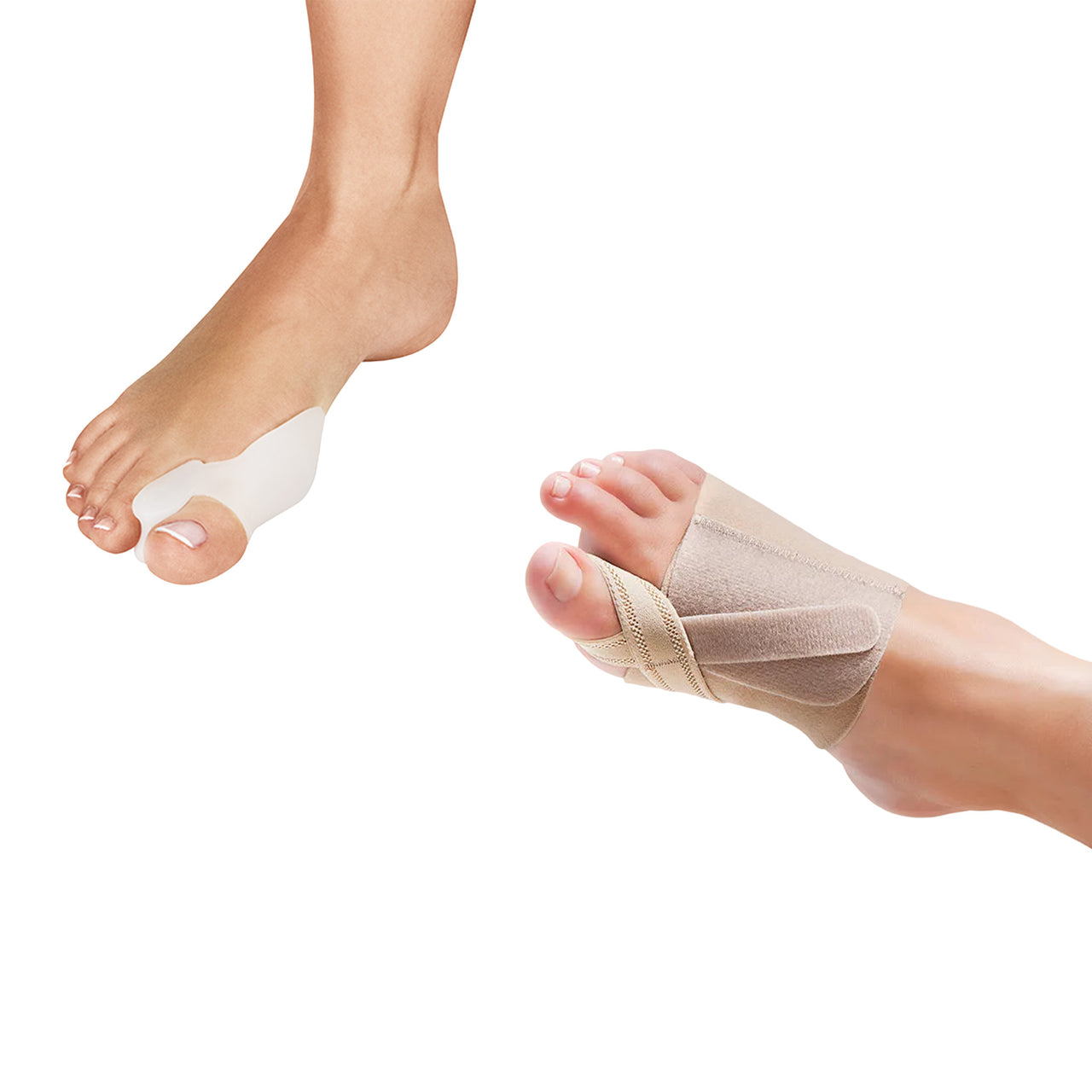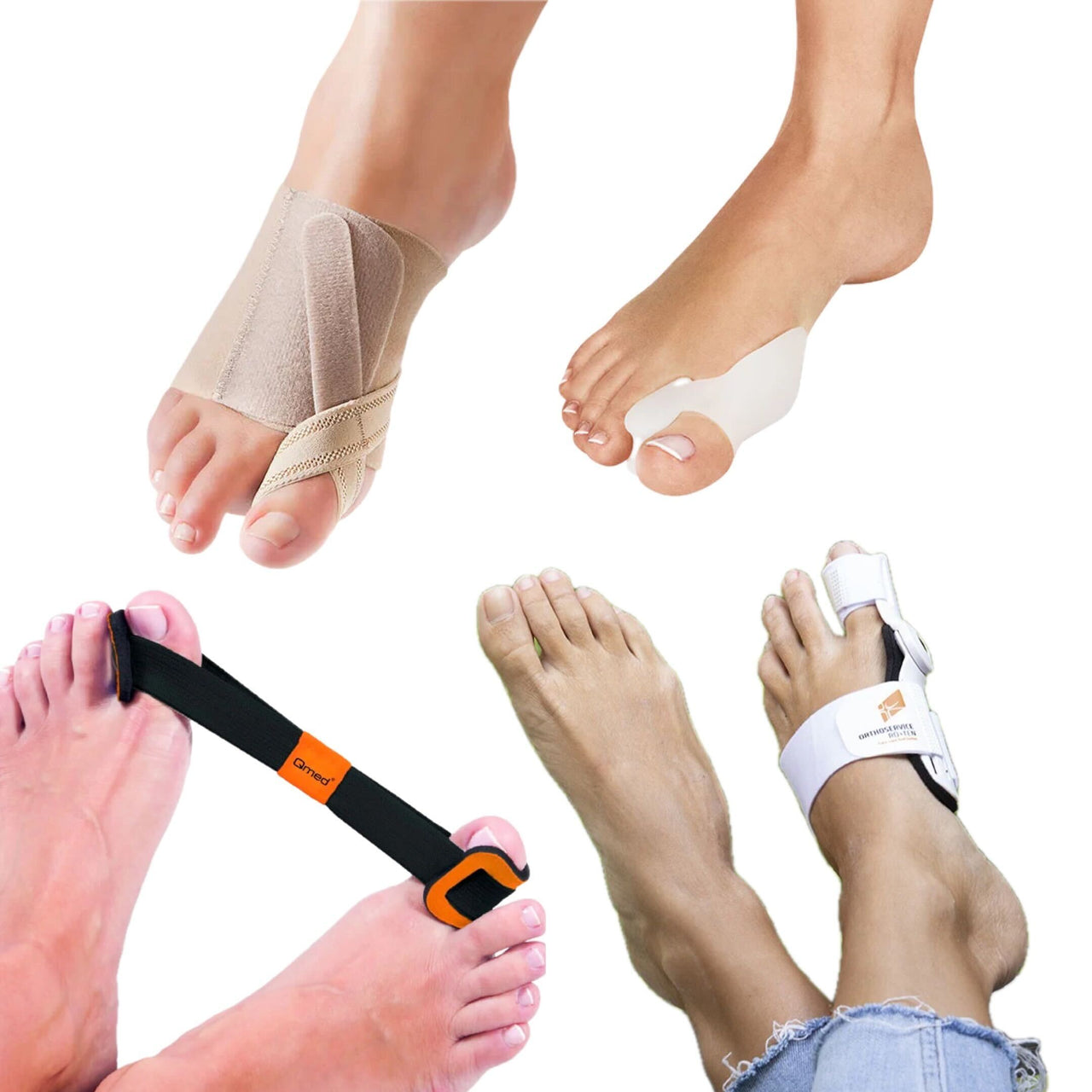

Hallux valgus betyder, at stortåen drejer mod de andre tæer, og leddet ved bunden af stortåen udsættes for tryk og vridning. Den rigtige indlægssål skal reducere belastningen på stortåens grundled og fordele trykket mere jævnt over forfoden uden at tvinge foden til unormale bevægelser. Der er især tre egenskaber, der er særligt vigtige, når man vælger en skoinlægssål: aflastning af det forreste svang, støtte til svangen og moderat pronationsstøtte.
Hvis du vil læse mere om hallux valgus, symptomer og underliggende årsager, anbefaler vi vores Skadeguide om hallux valgus.
Hvordan hallux valgus påvirker valget af sål
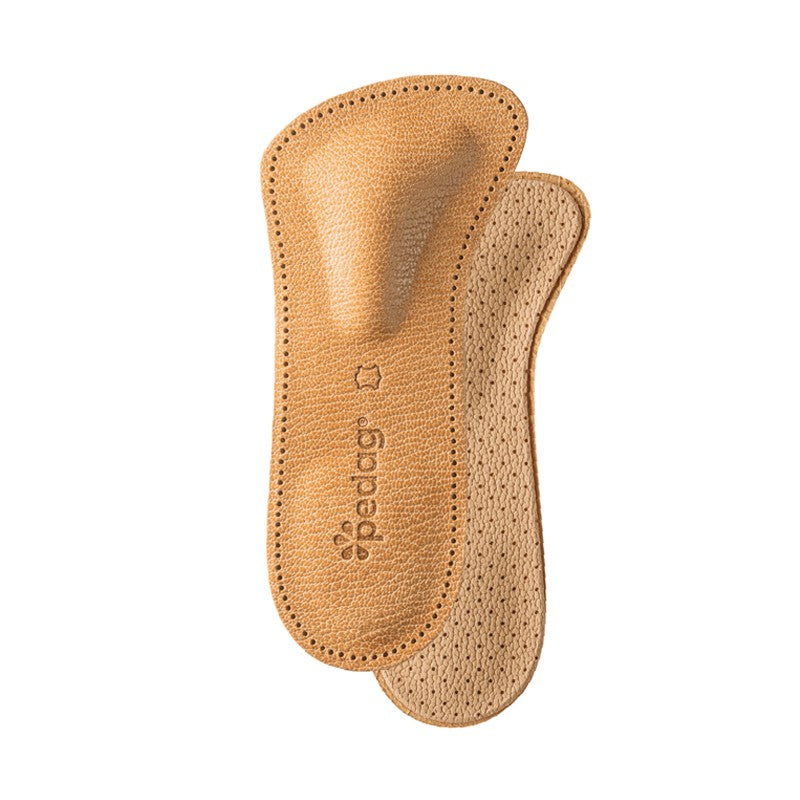
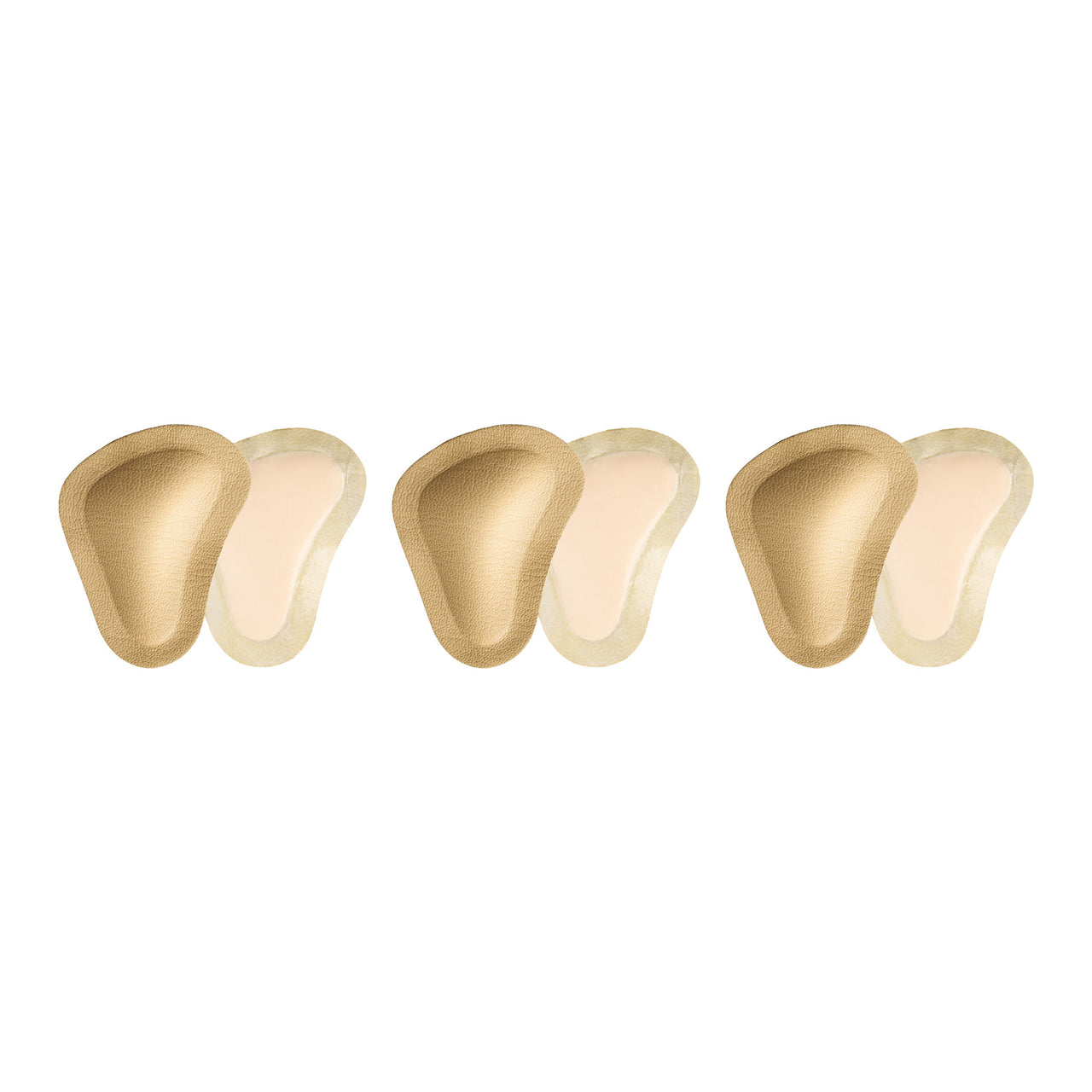
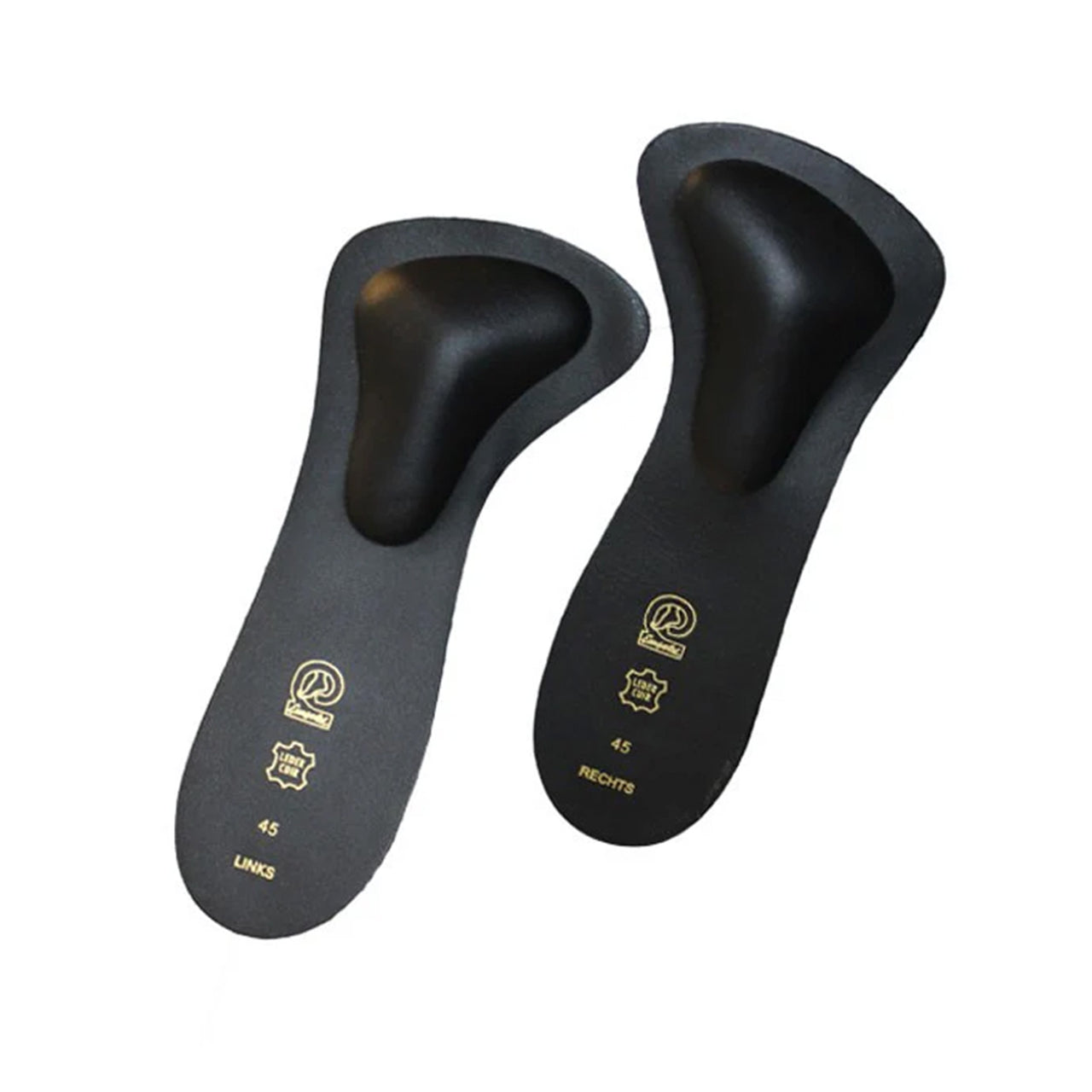
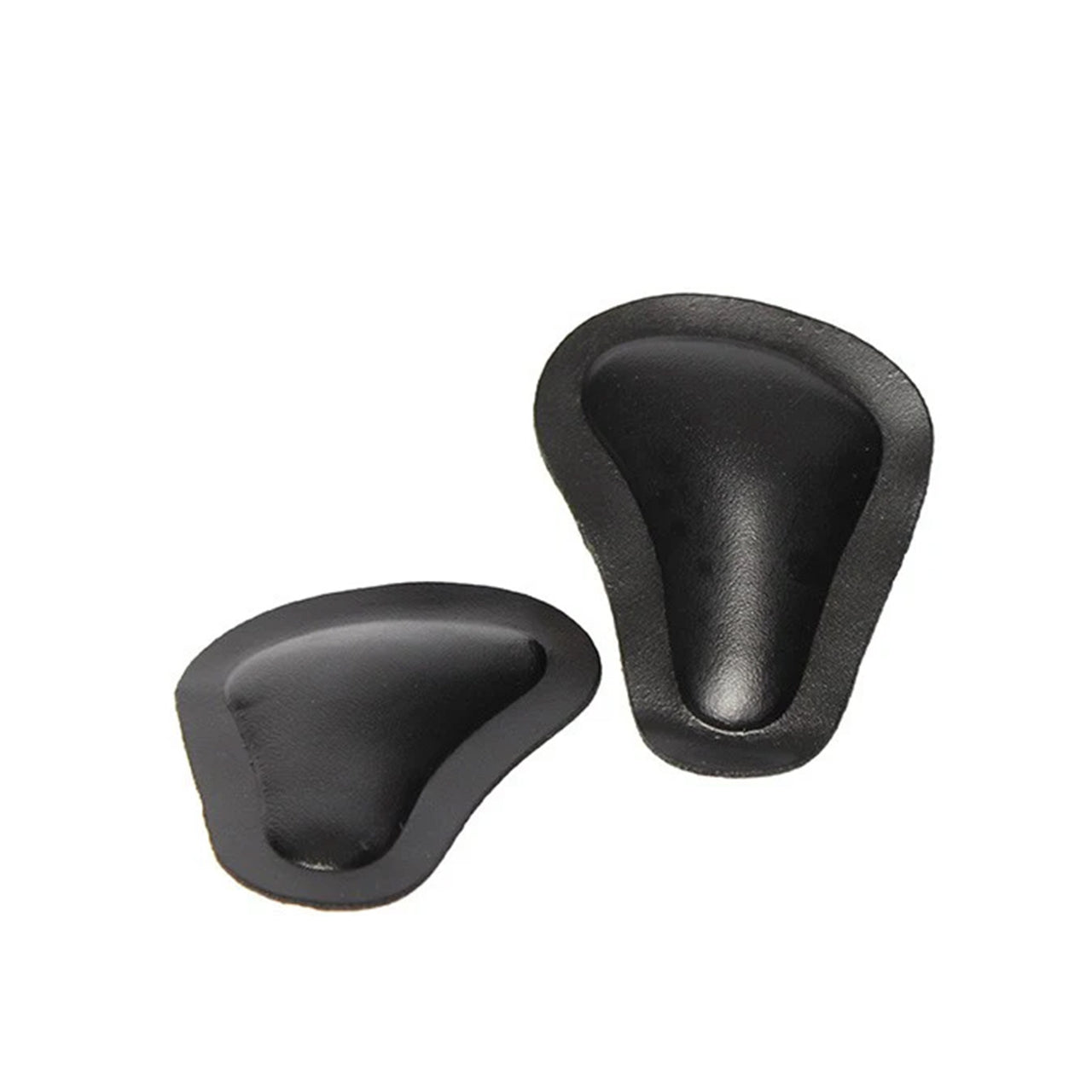
Når forfoden overbelastes, øges trykket på stortåens led, og området omkring knølen bliver ømt. En sål, der både støtter det længdegående svang og aflaster det forreste tværgående svang, flytter belastningen væk fra de følsomme zoner. I praksis bruges ofte en lille pelott, der placeres lige bag den tungeste punkt på fodsålen. En veljusteret pelott reducerer punkttrykket og gør det lettere at gå længere afstande uden at irritere leddet. En kombination af svangstøtte og forfodslyft er ofte en god grundopskrift ved hallux-besvær, især hvis du også har et nedsunket forreste svang. Vi har forskellige typer skoinlæg til hallux valgus i vores sortiment: tynde 3/4-længde indlægssåler med en pelott foran, der placeres oven på indlægssålen, hele indlægssåler og svangindlæg med svangstøtte og forfods-pelott, kulfiberindlægssåler, der udover svangstøtte og forfods-pelott er forstærket under stortåen for at lette overgangen i skridtene, og selvklæbende pelotter, der kan limes på enhver sål.
Egenskaber, der ofte har den største effekt
- Jævnere trykfordeling
- Støtte til svangen, kombineret med blød støtte bag på fodsålen, hjælper foden med at bære vægten over et større areal i stedet for at koncentrere trykket omkring stortåens led. Pelotten skal føles som et blidt løft, aldrig som en skarp bump.
- Moderat kontrol af pronation
- Hvis foden ruller kraftigt indad, kan en medial kile eller en forstærket inderside gøre skridtene mere neutrale. Målet er ikke at kontrollere hårdt, men at give blid støtte, der reducerer træk mod indersiden og dermed aflaster leddet.
- Når bevægelse i stortåens led forårsager smerte, kan en sål med en stivere zone under forfoden lindre området. Denne princip anvendes ofte ved hallux limitus eller rigidus, men kan også hjælpe ved hallux valgus, når hævelse eller irritation dominerer.
Hel- eller halvsål
Hvis skoen har en aftagelig indlægssål, fungerer en hel indlægssål, der erstatter den originale sål, normalt bedst. I strammere hverdagssko kan et 3/4-svangindlæg eller en tynd 3/4-pelott sål give mere plads til forfoden og hjælpe med at undgå nye trykpunkter på knølen. En anden mulighed er at montere fristående pelotter på den eksisterende indlægssål i skoen. Hvis du træner regelmæssigt, kan det ofte betale sig at vælge en sportsål, der kombinerer stødabsorbering, stabilitet og forfodslyft.
En almindelig tilgang er at starte med en helsål i hverdagsskoene, se om trykket falder, og derefter spejle løsningen i træningsskoene. Hvis pelotten er for langt frem eller tilbage, kan en justerbar model være lettere, især hvis fodsålen er følsom. I tilfælde af udtalt hævelse over knølen giver en tyndere sål mere plads og tolereres bedre på trods af lidt mindre støtte.
Kombiner indlæg med andre tiltag
Mange oplever den største daglige fordel, når indlægssålene kombineres med sko, der giver forfoden god højde og bredde. Ved midlertidige smertepunkter kan en model med stivere forfod lindre leddet ved at begrænse bevægelsen i slutningen af skridtene. Cirkulationsøvelser og en gradvis stigning i belastningen er vigtige, når man vender tilbage til aktivitet. Efter operation bruges indlæg nogle gange til at støtte foden, når helingen tillader det, men den behandlende sundhedsudbyder træffer altid den beslutning.
Start langsomt. Brug dine nye indlægssåler i korte perioder i de første par dage, og øg tiden, efterhånden som dine fødder vænner sig til dem. Føl, hvordan trykket fordeles under forfoden. En god indikator er, at du kan gå i normalt tempo uden at forårsage ledsmerter. Hvis en indlægssål straks forårsager øget ømhed over knølen eller følelsesløshed i tæerne, skal placeringen eller modellen justeres. Små ændringer i pelottens position kan gøre en stor forskel. Hvis smerten fortsætter eller hurtigt forværres, bør du søge professionel vurdering.
Se alle vores produkter til hallux valgus
Hvis du vil forstå mere om symptomer, årsager, behandling og hvornår det kan være klogt at søge behandling, anbefaler vi vores Skadeguide om hallux valgus.
Hvis du i stedet ønsker hjælp til at vælge det rigtige produkt ud fra dine problemer, er du altid velkommen til at kontakte vores fysioterapeut for personlig rådgivning.