Hælspore (plantar fasciitis)

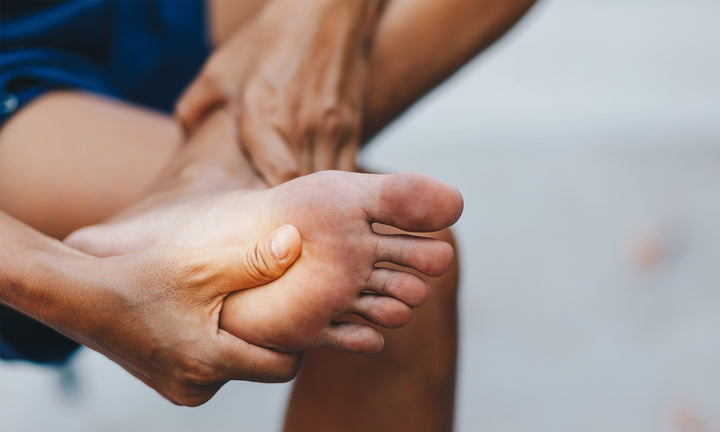
Hælspore og plantar fasciitis er to navne for den samme type problem og er en af de mest almindelige årsager til smerte under hælen hos voksne. Tilstanden opstår typisk, når senpladen under foden, plantar fasciaens fæste til hælbenet, overbelastes i længere tid. Smerten kan gøre det svært at gå normalt, især efter hvile eller om morgenen.
Hvad er hælspore (plantar fasciitis)?
En hælspore er en smertefuld tilstand, hvor plantar fascia, den stærke senplade under foden, fæstner til hælbenet. Når vævet overbelastes, opstår der irritation og små mikroskader i området, hvilket fører til smerte under hælen.
På trods af navnet er det normalt ikke selve knogleudvæksten – den såkaldte spore – der forårsager smerten. I stedet skyldes problemet oftest inflammation eller irritation ved fæstepunktet for plantar fascia. Tilstanden kaldes derfor ofte plantar fasciitis.
Fysioterapeutens tips ved hælspore
"Ved hælspore anbefaler jeg altid at starte med en hælkop med det samme — den aflaster senen ved hvert skridt. Kombiner med kompressionsstrømpe og natstrømpe for bedst effekt."
Ida
Autoriseret fysioterapeut · Rehaboteket
Symptomer
- Smerte på hælens inderside eller forkant, især ved opstart
- Stivhed og intense første skridt om morgenen
- Sværhed ved at gå eller stå på tå
- Smerte, der øges ved belastning og mindskes i hvile
- Lokal hævelse eller rødme
Symptomerne ved hælspore er ofte mest udtalte i situationer, hvor plantar fasciaens fæste belastes efter hvile eller gentagne stød.
Hvornår gør hælspore oftest mest ondt?
Smerterne ved hælspore varierer ofte afhængigt af hvornår og hvordan foden belastes. Mange oplever generne mest udtalte i bestemte situationer i løbet af dagen.
Første skridt om morgenen
Et af de mest typiske tegn på hælspore er kraftig smerte ved de første skridt, når du står op af sengen. I løbet af natten forkortes plantar fasciaen en smule, og når foden belastes igen, opstår der et træk i senefæstet ved hælen.
Efter at have siddet stille længe
Smerterne kan også opstå, når du begynder at gå efter at have siddet stille i længere tid, for eksempel efter arbejde ved skrivebordet eller en længere biltur.
Ved længere gåture eller meget stående
Når plantar fasciaen belastes over længere tid, kan smerten vende tilbage og føles mere som en dunkende eller brændende smerte under hælen.
Når du går barfodet på hårde gulve
Hårde overflader uden stødabsorbering kan øge trykket mod hælen og gøre smerten mere påtrængende.
Almindelige årsager & risikofaktorer
Hælspore udvikles ofte gradvist, når belastningen på plantar fasciaen bliver større end vævet kan klare. Almindelige årsager er langvarig gang eller stående arbejde, løb på hårde overflader og sko med dårlig stødabsorbering.
Andre faktorer, der kan øge risikoen, er nedsunket svang, stram lægmuskulatur, overvægt eller en pludselig stigning i træningsmængden. Tilstanden er hyppigst hos personer mellem 40 og 60 år, men kan forekomme i alle aldre.
Hvornår skal du søge lægehjælp?
Ved vedvarende smerte under hælen, som ikke forbedres trods aflastning, bedre sko eller egenomsorg, bør du kontakte sundhedsvæsenet for en vurdering. Det samme gælder, hvis smerten bliver kraftig eller påvirker din evne til at gå normalt.
Anbefalede beskyttelser & støtte
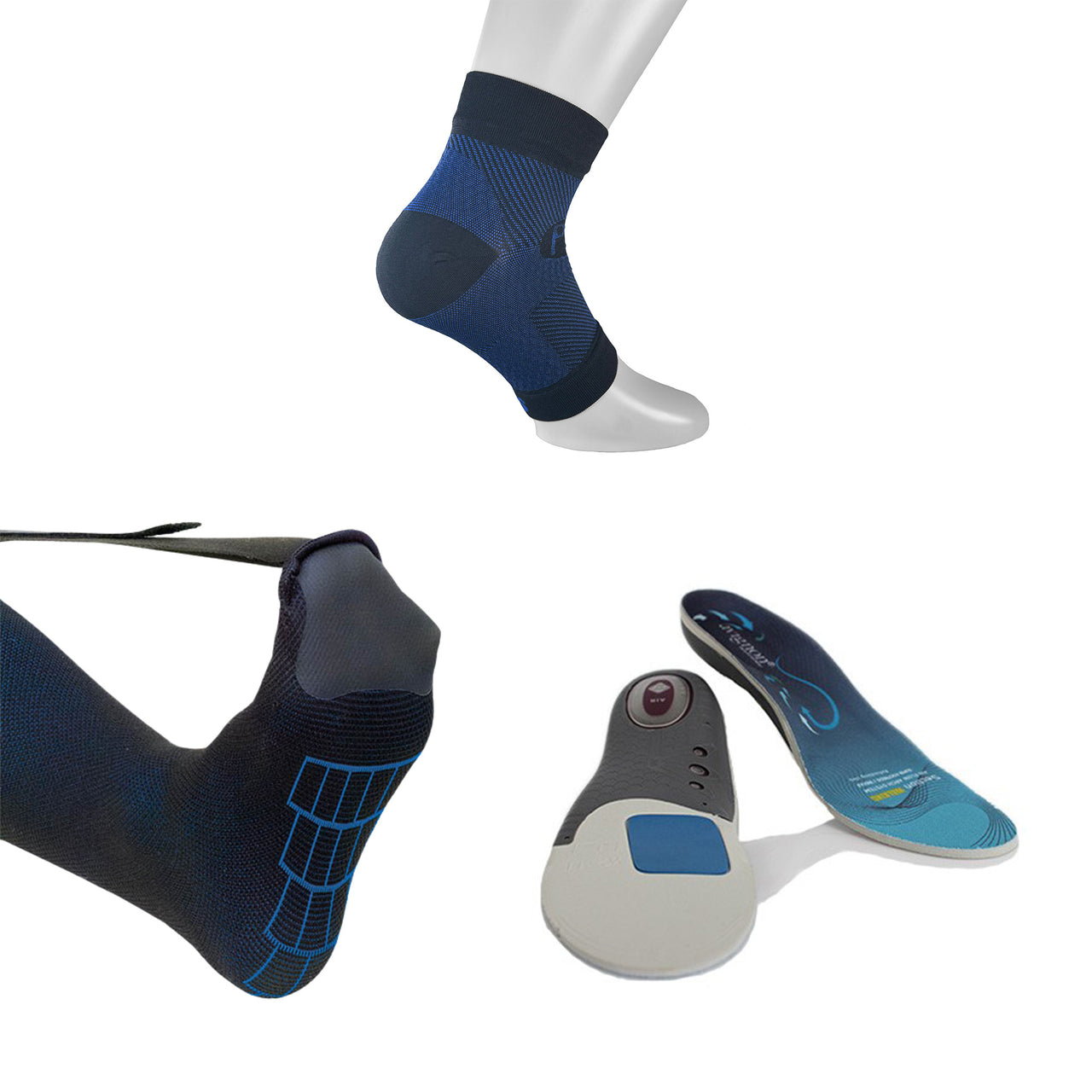
Ved hælspore kan den rette beskyttelse og aflastning bidrage til at mindske smerte og forbedre komforten i hverdagen. Hjælpemidler som hælkopper, stødabsorberende indlæg eller svangstøtte kan mindske belastningen på plantar fasciaens fæste. En natskinne strækker senefæstet om natten og modvirker morgenstivhed. Kompressionsstrømper, som eksempelvis PF8, giver støtte og mindsker belastningen under aktivitet.
Ved at forbedre stødabsorberingen i hælen og aflaste senefæstet under foden kan disse hjælpemidler bidrage til en blødere belastning ved hvert skridt. For mange kan den rette støtte i kombination med tilpasset aktivitet gøre en stor forskel for smerten.
Se alle beskyttelser og støtte, der kan aflaste ved hælspore
Relaterede skader
Skadeguiden – hurtig vejledning til almindelige skader
I vores Skadeguide får du klar og letforståelig information om almindelige skader, hvordan de opstår, og hvilke symptomer der typisk optræder. Du får også anbefalinger til, hvilke beskyttelser og hjælpemidler der kan lindre dine gener og hjælpe dig videre i din rehabilitering. Al information er baseret på ekspertviden fra vores autoriserede fysioterapeut.
Find de rigtige støtteprodukter til dine behov
Der er flere måder at finde det rigtige produkt på vores hjemmeside. For et mere personligt udvalg kan du bruge vores filtre og sortere efter skade, kropsdel eller sport. Du kan også få hjælp fra vores AI-assistent Eir, som er trænet i alt indhold på vores hjemmeside og kan hjælpe dig med produktanbefalinger, pasforms spørgsmål og ordre-relaterede bekymringer – døgnet rundt. Hvis du hellere vil tale direkte med vores autoriserede fysioterapeut Ida, kan du kontakte hende via e-mail for personlig rådgivning og støtte i dit produktvalg.