Akillesseneinflammation er en almindelig overbelastningsskade, der rammer akillessenen, kroppens stærkeste sene. Smerten opstår ofte i forbindelse med øget træningsmængde, men kan også udvikle sig ved langvarig daglig belastning.
Hvad er akillesseneinflammation?
Akillesseneinflammation er en tilstand, hvor akillessenen bliver irriteret og overbelastet. Akillessenen, også kendt som akillessenen, forbinder lægmusklerne med hælbenet og er afgørende for bevægelser som gang, løb og hop.
Når belastningen på senen bliver større end vævet kan klare, kan der opstå små mikroskader. Dette fører til smerte, stivhed og nogle gange hævelse i området. Problemerne opstår oftest midt på senen, men kan også være lokaliseret ved hælbenets tilhæftning.
Fysioterapeutens tips ved akillessenebetændelse
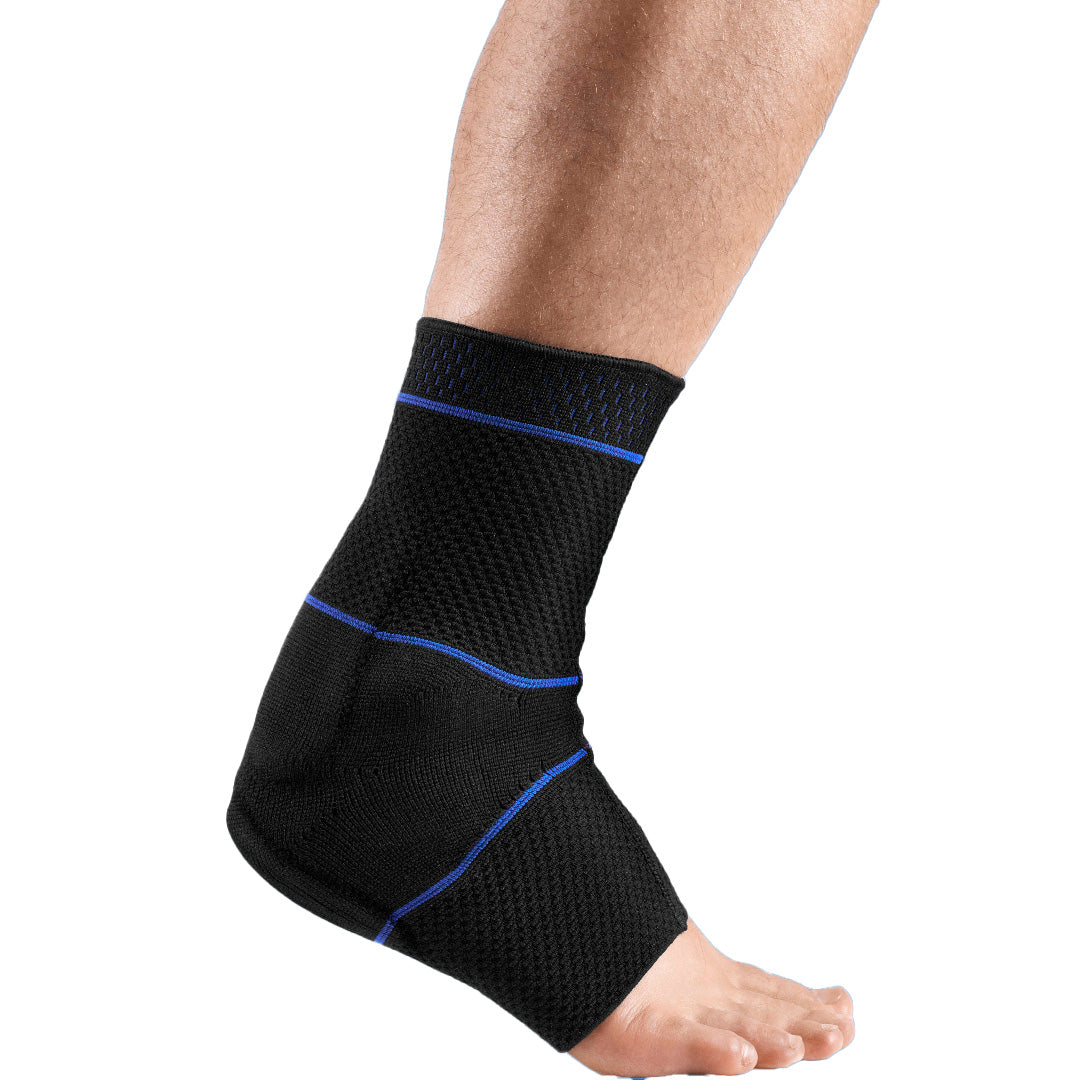
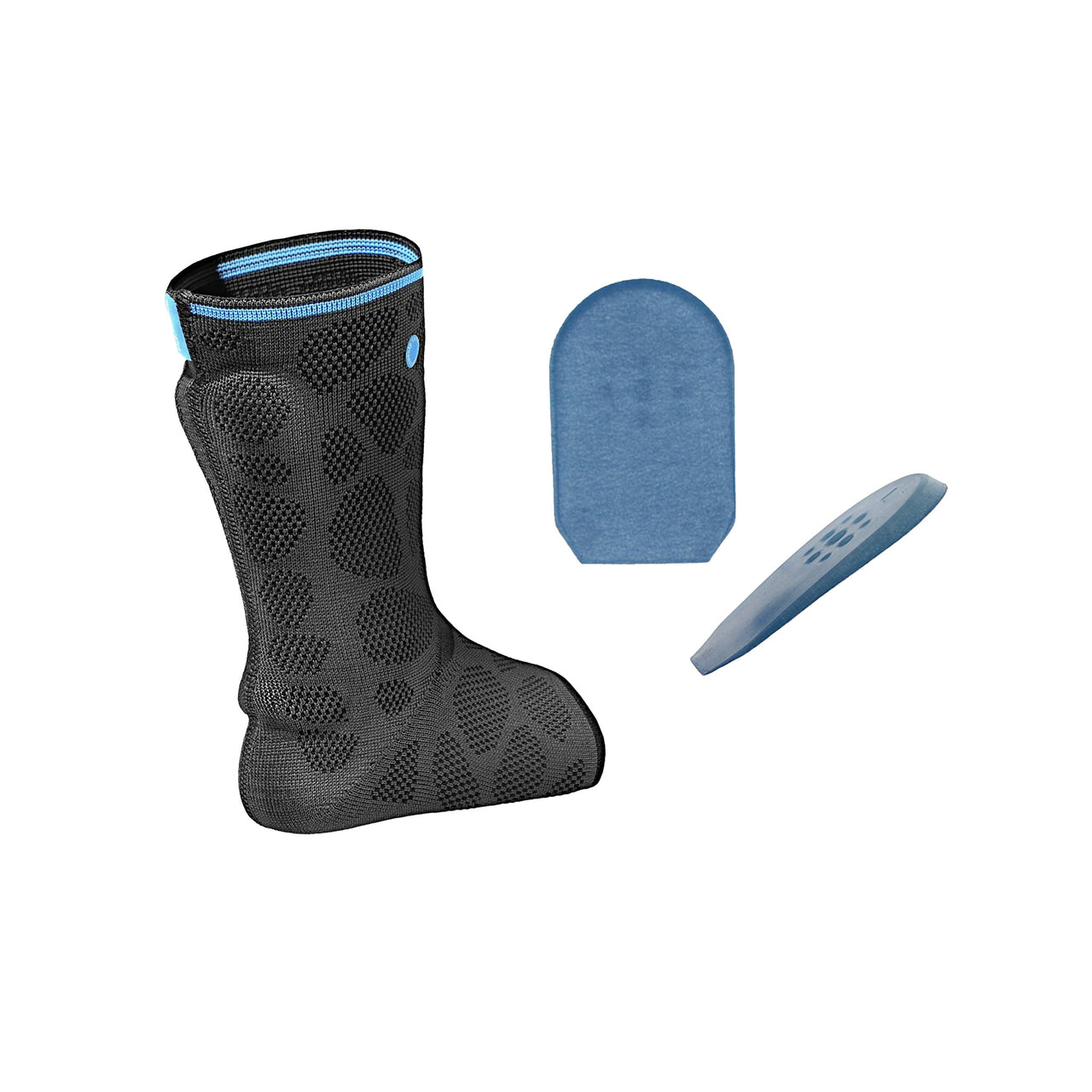
"Ved akillessenebetændelse anbefaler jeg at starte med en hælkile for hurtigt at reducere belastningen på akillessenen. Kombinér med en akillessenebeskyttelse for kompression og støtte under aktivitet. Ved større gener eller behov for ekstra stabilitet kan en mere avanceret ankelstøtte give yderligere aflastning."
Ida
Autoriseret fysioterapeut · Rehaboteket
Symptomer
- Lokal smerte og ømhed langs akillessenen
- Stivhed og problemer med at komme i gang, især om morgenen
- Hævelse omkring senen, nogle gange med rødme og varme
- Smerte, der øges ved belastning
- Knirkende fornemmelse eller lyd ved bevægelse
- Hvilesmerter ved langvarig inflammation
Symptomerne ved akillesseneinflammation opstår ofte i situationer, hvor akillessenen gentagne gange belastes.
Hvornår gør akillesseneinflammation mest ondt?
Smerten ved akillesseneinflammation opstår ofte i situationer, hvor akillessenen belastes kraftigt eller gentagne gange.
Ved de første skridt om morgenen
Mange oplever stivhed og smerte i akillessenen, når de begynder at gå efter en nats hvile.
Ved løb eller hop
Aktiviteter, hvor lægmusklerne arbejder intensivt, kan forværre symptomerne.
Efter fysisk aktivitet
Smerten kan være mere udtalt efter træning end under selve aktiviteten.
Ved tryk på akillessenen
Nogle oplever ømhed, når de trykker langs senen eller når sko berører området.
Almindelige årsager & risikofaktorer
Den mest almindelige årsag til akillesseneinflammation er overbelastning. Det kan opstå ved hurtig stigning i træningsmængde, intens aktivitet eller utilstrækkelig restitution.
Anatomiske faktorer kan også bidrage. Overpronation af foden lægger lateralt pres på akillessenen, hvilket kan øge irritationen. Uhensigtsmæssige sko, hårde overflader og stramme lægmuskler kan også øge risikoen.
Hvornår skal du søge lægehjælp?
Hvis smerten vedvarer, der er vanskeligheder med at belaste foden, eller hvis symptomerne ikke forbedres trods hvile og aflastning, bør du kontakte din sundhedsudbyder. Det er især vigtigt at få en vurdering ved langvarige eller tilbagevendende problemer.
Anbefalet beskyttelse & støtte
Ved akillesseneinflammation kan den rette beskyttelse og aflastning bidrage til at reducere smerte og øge komforten i hverdagen og ved aktivitet.
Et hælsespore kombinerer hælkileaflastning med kompression, hvilket kan reducere hævelse og give støtte til senen. En pronationssåle kan hjælpe med at korrigere fodens belastning og reducere lateralt pres på akillessenen. Et hælsespore kan også aflaste ved at reducere senens arbejdsområde.
Rehabilitering med individuelt tilpassede øvelser hos en fysioterapeut er ofte en vigtig del af behandlingen, da det styrker senen og forbedrer belastningsmodstanden.
Se alle bandager og støtte, der kan aflaste akillesseneinflammation
Relaterede skader
For mere information om fod og hæl kan du læse videre i Skadeguide Fod & Hæl. Du kan også gå til Skadeguidens hovedside for at læse om andre skader og symptomer.
Skadeguiden – hurtig vejledning til almindelige skader
I vores Skadeguide får du klar og letforståelig information om almindelige skader, hvordan de opstår, og hvilke symptomer der typisk optræder. Du får også anbefalinger til, hvilke beskyttelser og hjælpemidler der kan lindre dine gener og hjælpe dig videre i din rehabilitering. Al information er baseret på ekspertviden fra vores autoriserede fysioterapeut.
Find de rigtige støtteprodukter til dine behov
Der er flere måder at finde det rigtige produkt på vores hjemmeside. For et mere personligt udvalg kan du bruge vores filtre og sortere efter skade, kropsdel eller sport. Du kan også få hjælp fra vores AI-assistent Eir, som er trænet i alt indhold på vores hjemmeside og kan hjælpe dig med produktanbefalinger, pasforms spørgsmål og ordre-relaterede bekymringer – døgnet rundt. Hvis du hellere vil tale direkte med vores autoriserede fysioterapeut Ida, kan du kontakte hende via e-mail for personlig rådgivning og støtte i dit produktvalg.